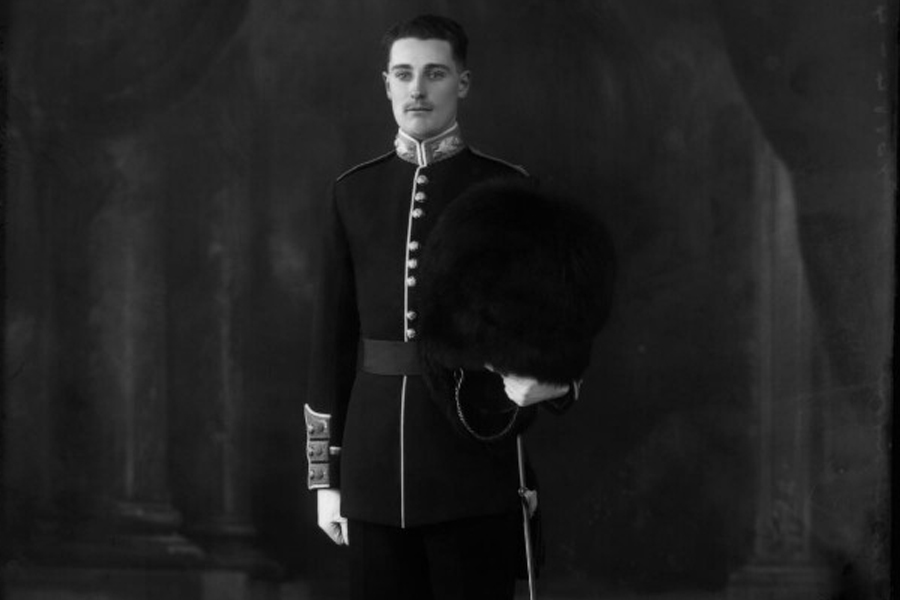
Basic Information
| Item | Details |
|---|---|
| Full Name | John Herbert Bowes Lyon |
| Common Name | Jock Bowes Lyon |
| Date of Birth | 1 April 1886 |
| Place of Birth | England |
| Date of Death | 7 February 1930 |
| Age at Death | 43 |
| Cause of Death | Pneumonia |
| Parents | Claude George Bowes Lyon, 14th Earl of Strathmore and Kinghorne, and Cecilia Nina Cavendish Bentinck |
| Spouse | The Honourable Fenella Hepburn Stuart Forbes Trefusis |
| Marriage Date | 29 September 1914 |
| Children | Patricia, Anne, Nerissa, Diana, Katherine |
| Occupation | Stockbroker, Territorial Army Officer, Deputy Lieutenant |
| Education | Eton College, New College Oxford |
| Notable Achievement | First class cricketer for Oxford University and Deputy Lieutenant of Forfarshire |
| Family Connection | Brother of Queen Elizabeth the Queen Mother and uncle of Queen Elizabeth II |
A Life That Bridged Aristocracy and Everyday Duty
I see more than just another member of the British nobility when I consider the life of John Bowes Lyon. I saw someone who balanced tradition with contemporary work life, luxury and duty.
John Herbert Bowes Lyon was born on April 1, 1886, into one of the most prestigious noble families in Britain. His mother, Cecilia Nina Cavendish Bentinck, was descended from another illustrious aristocratic family, and his father, Claude George Bowes Lyon, was the 14th Earl of Strathmore and Kinghorne. Glamis Castle, their family’s Scottish residence, has stood for centuries and symbolized many generations of Scottish history.
John, however, was not meant to inherit the earldom. He took a different route as the second son. He developed a professional career in London’s financial sector while upholding the duties required of an aristocratic gentleman instead of taking on the role of head of the family estate.
His younger sister became Queen Elizabeth the Queen Mother, making him the maternal uncle of Queen Elizabeth II, which is the main reason history would remember him. But his personal tale is worth much more than his royal ties.
Education and Sporting Achievement
Like many young men of Britain’s upper class during the Edwardian era, John attended Eton College before continuing his studies at New College, Oxford.
Oxford offered more than academic development. It also allowed him to pursue cricket at an elite level.
Between 1906 and 1907, John played first class cricket for Oxford University as a fast medium bowler. Although his cricket career lasted only three matches, representing Oxford at first class level was a significant achievement. Competition for places was fierce, and only talented players earned university colors.
Cricket reflected many of the values that shaped John’s generation. Discipline, teamwork, patience, and resilience became qualities that later appeared again during military service.
Building a Career in the City of London
Unlike many aristocrats who relied entirely upon inherited estates, John entered the financial profession before the First World War.
He joined the respected stockbroking firm Rowe and Pitman in the City of London. This career demonstrated an interesting balance between noble heritage and professional ambition.
Public records reveal little about his personal finances. While his family possessed considerable wealth through estates such as Glamis Castle, no detailed documentation survives regarding John’s own income or investment portfolio.
As a second son, his financial position differed substantially from that of his elder brother, who inherited the family title and estates. John’s livelihood instead combined professional earnings with the advantages of belonging to an established aristocratic family.
Marriage and a Growing Family
On 29 September 1914, shortly after Britain entered the First World War, John married The Honourable Fenella Hepburn Stuart Forbes Trefusis.
Fenella came from another prominent noble family as the daughter of Charles Hepburn Stuart Forbes Trefusis, the 21st Baron Clinton.
Together they welcomed five daughters.
| Child | Birth | Notes |
|---|---|---|
| Patricia Bowes Lyon | 6 July 1916 | Died in infancy in 1917 |
| Anne Ferelith Fenella Bowes Lyon | 4 December 1917 | Later Princess Anne of Denmark |
| Nerissa Jane Irene Bowes Lyon | 18 February 1919 | Later lived at Royal Earlswood Hospital |
| Diana Cinderella Mildred Bowes Lyon | 14 December 1923 | Married Peter Gordon Colin Somervell |
| Katherine Juliet Bowes Lyon | 4 July 1926 | Lived until 2014 |
Their marriage lasted only sixteen years before John’s untimely death, leaving Fenella to raise four surviving daughters alone.
The Challenges of War
The First World War dramatically altered John’s life.
In 1915, he joined the Black Watch Territorial Army. Before participating in the Battle of Aubers Ridge, tragedy struck in an unexpected way.
He accidentally shot himself in the left forefinger. The injury proved severe enough that surgeons amputated the finger the following day.
While receiving treatment, John revealed that he had experienced a nervous breakdown in 1912 and suffered from neurasthenia, a diagnosis commonly used during that period for nervous exhaustion and related symptoms.
Rather than continuing frontline combat, he later served with the Ministry of Munitions and remained connected to the Territorial Army throughout the conflict.
Following the war, administrative complications arose when he failed to appear for demobilisation parades, creating the possibility of military disciplinary proceedings before the matter was eventually resolved.
His wartime experience illustrates that not every battlefield scar is immediately visible. Sometimes the deepest wounds remain hidden beneath polished uniforms and family expectations.
Public Service After the War
John gradually returned to civilian life and resumed work as a stockbroker.
Recognition of his public standing came on 19 June 1920 when he was appointed Deputy Lieutenant of Forfarshire.
This honorary position reflected both his family status and his service to local society. Deputy Lieutenants represented the Crown within their counties and assisted with ceremonial and civic responsibilities.
Although he never held major political office, the appointment demonstrated the respect he commanded within his community.
A Brother of the Future Queen Mother
Among John’s many siblings, one would become one of the most beloved royal figures of the twentieth century.
Elizabeth Angela Marguerite Bowes Lyon married the Duke of York in 1923. When her husband unexpectedly became King George VI in 1936, she became Queen Consort and later became known around the world as Queen Elizabeth the Queen Mother.
John never witnessed these extraordinary events.
When he died in 1930, his niece Elizabeth was only a young child, and Princess Margaret had not yet been born.
His early death meant he missed the remarkable transformation of his family from respected Scottish nobility into the center of the British monarchy.
The Later Story of His Daughters
Decades after his passing, the most talked-about aspect of John’s family history surfaced.
Nerissa and Katherine, his children, have serious developmental impairments from birth. Together, they entered Royal Earlswood Hospital in 1941.
The general public has little knowledge about their lives for many years. Both sisters were mistakenly recorded as dead while they were still living due to confusion in published peerage records.
In the late 20th century, the problem gained widespread attention and spurred ongoing conversations about institutional care, disability, privacy, and shifting societal attitudes.
Despite having little vocal communication, hospital workers regarded both women as loving people who could grasp some conversation.
In the end, Katherine lived to be 87 years old in 2014.
Since then, their tale has been featured in television dramas, documentaries, and several conversations regarding the history of the royal family. While relatives contended that family members, especially their mother Fenella, kept in touch for many years, several depictions focused on solitude.
The Trefusis Family Medical History
As I explore the broader family history, one pattern stands out.
The developmental disabilities affecting Nerissa and Katherine did not appear to originate within the Bowes Lyon family itself.
Instead, historians and medical commentators have long examined the maternal Trefusis and Clinton family line.
Five female first cousins experienced remarkably similar lifelong developmental disabilities.
| Family Branch | Individuals |
|---|---|
| John and Fenella Bowes Lyon | Nerissa Bowes Lyon, Katherine Bowes Lyon |
| Harriet Trefusis and Henry Fane | Idonea Fane, Rosemary Fane, Etheldreda Fane |
All five women entered Royal Earlswood Hospital in 1941.
Modern researchers have suggested several possible inherited conditions, including unidentified X linked disorders and other rare genetic syndromes. However, no confirmed molecular diagnosis has ever become part of the public record.
Because detailed medical records and DNA evidence remain unavailable, the exact cause continues to be uncertain.
What is clear is that this cluster of cases appears connected to the Trefusis lineage rather than the Bowes Lyon family itself.
Family Timeline
| Year | Event |
|---|---|
| 1886 | John Bowes Lyon is born |
| 1906 to 1907 | Plays first class cricket for Oxford |
| Before 1914 | Works as stockbroker in London |
| 1914 | Marries Fenella Trefusis |
| 1915 | Joins the Black Watch and suffers accidental gunshot injury |
| 1916 | Patricia is born |
| 1917 | Anne is born in Washington, DC |
| 1919 | Nerissa is born |
| 1920 | Appointed Deputy Lieutenant of Forfarshire |
| 1923 | Diana is born |
| 1926 | Katherine is born |
| 1930 | Dies at Glamis Castle from pneumonia |
| 1941 | Nerissa and Katherine admitted to Royal Earlswood Hospital |
| 2014 | Katherine dies at age 87 |
FAQ
Who was John Bowes Lyon?
John Bowes Lyon was a British aristocrat, stockbroker, army officer, and the older brother of Queen Elizabeth the Queen Mother. He was also the maternal uncle of Queen Elizabeth II.
What was John Bowes Lyon’s profession?
He worked as a stockbroker with the London firm Rowe and Pitman while also serving in the Territorial Army and later becoming Deputy Lieutenant of Forfarshire.
Did John Bowes Lyon serve during the First World War?
Yes. He served with the Black Watch and later with the Ministry of Munitions after an accidental gunshot injury led to the amputation of one finger.
Who was John Bowes Lyon’s wife?
He married The Honourable Fenella Hepburn Stuart Forbes Trefusis on 29 September 1914. She raised their daughters after his death in 1930.
How many children did John Bowes Lyon have?
He had five daughters: Patricia, Anne, Nerissa, Diana, and Katherine. Patricia died during infancy, while Anne later became Princess Anne of Denmark.
Why are Nerissa and Katherine Bowes Lyon remembered today?
Their lives drew widespread attention because both sisters lived with severe developmental disabilities and spent many decades in institutional care. Their story later became the subject of documentaries and historical discussion.
Is the medical condition in the family known?
No. Researchers have proposed several possible inherited genetic disorders affecting the Trefusis family line, but no confirmed diagnosis has ever been established publicly.