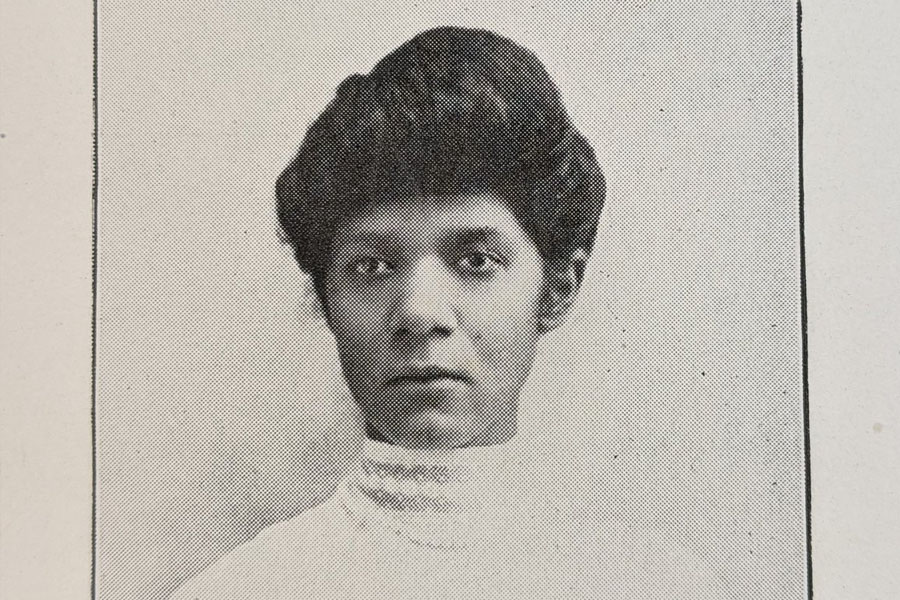
Basic Information
| Field | Details |
|---|---|
| Full Name | Portia Marshall Washington Pittman |
| Also Known As | Portia M. Washington |
| Birth | June 6, 1883 |
| Birthplace | Tuskegee, Alabama |
| Parents | Booker T. Washington and Fannie Smith Washington |
| Stepmother | Olivia A. Davidson |
| Spouse | William Sidney Pittman (married 1907, separated 1928) |
| Children | William Sidney Pittman Jr., Booker Pittman, Fannie P. Pittman (later Kennedy) |
| Occupations | Pianist, music teacher, choir director, educator |
| Education | Framingham Normal School, Wellesley College (briefly), Tuskegee Institute, Bradford Academy |
| Notable Achievement | First African American graduate of Bradford Academy (1905) |
| Death | February 26, 1978 |
| Place of Death | Washington, D.C. |
Roots and Early Years
Portia M. Washington was born into a purposeful family. While her mother, Fannie Smith Washington, died when Portia was a baby, her father, Booker T. Washington, was turning Tuskegee Institute into a national light. Grief and anticipation molded his childhood. Early stability came from stepmother Olivia A. Davidson, a brilliant schoolteacher. In the Washington home, thoughts moved as fast as Alabama air, and Portia joined the conversation with music.
By age ten, she was performing publicly at a piano, not simply as a prodigy but as a disciplined student. The family’s network helped launch Portia northward for schooling, where she learned to stand on her own feet as both a scholar and an artist.
Education in the North and at Tuskegee
In the early 1900s, Portia studied across the American educational spectrum. Her education included Framingham Normal School, Wellesley College, Tuskegee Institute, and Bradford Academy, where she became the first African American graduate in 1905. That milestone counted. Portia gained qualifications and confidence to teach, perform, and lead as New England institutions entered a new era.
Her training blended liberal studies with the rigor of teacher preparation. It also affirmed her love of music as both a craft and a calling. When she sat at a keyboard, practice and pedagogy met in the same measure.
Marriage, Family, and a Life in Motion
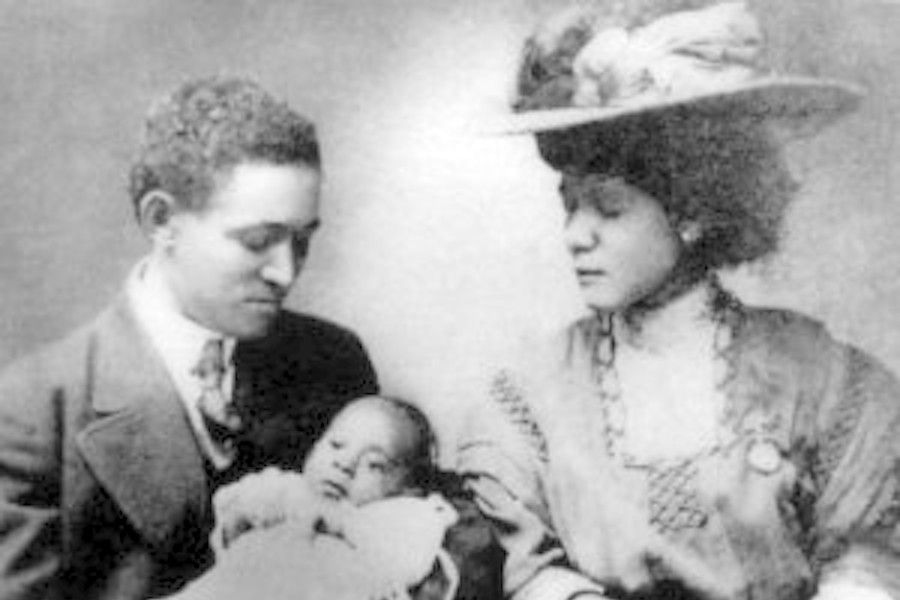
Portia married promising Drexel-trained African American architect William Sidney Pittman on October 31, 1907. The couple joined disciplined architectural and musical professions. After Washington, D.C., where Pittman built a practice and community networks, the couple moved to Dallas, Texas.
William Sidney Jr., Booker, and Fannie were their offspring. Famous jazz clarinetist and saxophonist Booker Pittman was born in 1909 and performed in the US, Europe, and Brazil. Family life shifted with employment and travel. Portia left Pittman in 1928 and moved to Tuskegee with her daughter to teach.
Music and Teaching Career
Music education dominated Portia’s career. She taught piano, conducted choirs, and coordinated musical activities that improved skill and communal spirit. She shaped young musicians at Booker T. Washington High School in Dallas, a segregated community where the arts offered consolation and ambition. Her lectures and choir rehearsals had the steady cadence of someone who recognized music could mold people and unite neighborhoods.
Later, she taught and accompanied at Tuskegee and private studios. After leaving Tuskegee’s faculty in 1939 over certification, she ran a private studio until 1944. She emphasized foundations but never lost sight of performance as art. Students left her classes with stronger fingers and ears.
Guardian of Memory and Civic Presence
Portia combined filial obligation with public stewardship in midlife and beyond. In the 1950s and 1960s, she participated in commemorations that led to the Booker T. Washington National Monument and related interpretive work to preserve her father’s home, antiques, and heritage. If Tuskegee was her youth stage, she helped maintain its archive. She realized that memory is a dwelling that needs loving caregivers.
Her attendance at anniversaries, celebrations, and historical events made the Washington family’s contributions feel personal and ongoing. She spoke across generations as Booker T. Washington’s first and only daughter and an educator who could transform history into a lesson plan.
Timeline at a Glance
| Year | Event |
|---|---|
| 1883 | Born on June 6 in Tuskegee, Alabama |
| 1884 | Mother Fannie Smith Washington dies |
| 1890s | Studies in the North, including Framingham Normal School, and at Tuskegee |
| 1905 | Graduates from Bradford Academy, first African American to do so |
| 1907 | Marries architect William Sidney Pittman on October 31 |
| 1909 | Birth of son Booker Pittman |
| 1910s | Teaches and performs in Washington, D.C., then Dallas, Texas |
| 1928 | Separates from Pittman, returns to Tuskegee with daughter |
| 1939 | Leaves Tuskegee faculty, continues private teaching |
| 1940s | Retires from regular teaching around 1944 |
| 1950s-1970s | Active in preservation and commemorations of Booker T. Washington’s legacy |
| 1978 | Dies on February 26 in Washington, D.C. |
Family Snapshot
| Relation | Name | Notes |
|---|---|---|
| Father | Booker T. Washington | Educator, orator, Tuskegee Institute founder |
| Mother | Fannie Smith Washington | Died in 1884 |
| Stepmother | Olivia A. Davidson | Educator and Tuskegee leader |
| Paternal Grandmother | Jane (Ferguson) | Enslaved, central figure in Booker T. Washington’s early life |
| Paternal Step-Grandfather | Washington Ferguson | Married to Jane after emancipation |
| Spouse | William Sidney Pittman | Architect, practice in Washington, D.C., and Dallas |
| Son | William Sidney Pittman Jr. | Eldest child |
| Son | Booker Pittman | Jazz clarinetist and saxophonist, born 1909 |
| Daughter | Fannie P. Pittman | Later known as Fannie P. Kennedy |
| Stepbrothers | Booker T. Washington Jr., Ernest Davidson Washington | Sons of Booker T. Washington and Olivia A. Davidson |
Work and Influence in Context
Portia worked in a segregated America where custom and legislation limited Black women’s arts careers. Her accomplishments in New England, Southern, and community settings made her a model of discipline and refinement. By building school choirs and student studios, she made music a civic language that crossed boundaries.
Her career reflected early 20th-century American Black middle class changes such professional marriages, interstate migrations for job, reliance on schools for mobility, and institution development. If her father built Tuskegee on industry and education, Portia reinforced them with scales, songs, rehearsals, and recitals.
Legacies Woven Through Generations
Portia’s life continued after the show ended. Her son Booker translated the family’s music into jazz across oceans and eras. Her honoring of Booker T. Washington preserved Reconstruction, industrial education, and southern Black self-help in public history. Teaching and caring showed how arts and memories weave a community like warp and weft.
FAQ
Who were Portia M. Washington’s parents?
She was the daughter of Booker T. Washington and Fannie Smith Washington.
Who was her stepmother?
Olivia A. Davidson, an influential educator and Tuskegee leader, served as Portia’s stepmother.
Where and when was she born?
She was born on June 6, 1883, in Tuskegee, Alabama.
What was her education?
She studied at Framingham Normal School, briefly at Wellesley College, and Tuskegee Institute, and graduated from Bradford Academy in 1905.
Was she the first Black graduate of Bradford Academy?
Yes, she is credited as the first African American graduate of Bradford Academy in 1905.
Whom did she marry?
She married architect William Sidney Pittman in 1907 and later separated from him in 1928.
Did she have children?
Yes, three children: William Sidney Jr., Booker, and Fannie.
What was her profession?
She was a pianist, music teacher, choir director, and educator.
Where did she teach?
She taught in Washington, D.C., in Dallas at Booker T. Washington High School, and at Tuskegee, and also maintained a private studio.
When did she die?
She died on February 26, 1978, in Washington, D.C.